HAITCH: Motion Correction
HAITCH is a robust framework for distortion and motion correction in fetal multi-shell diffusion-weighted MRI. It is an integral part of the FEDI toolbox, enabling high-quality preprocessing of challenging fetal dMRI datasets, and facilitating accurate downstream analyses such as tractography and microstructural modeling.
For full methodological and validation details, refer to the following publication:
HAITCH Pipeline Steps
The HAITCH pipeline consists of 10 main processing steps that progressively correct for noise, artifacts, distortion, and motion in fetal dMRI data:
DWI Denoising (GSVS): Removes noise using the Generalized Spatially Varying Smoothing (GSVS) estimator
Gibbs Ringing Artifact Removal: Eliminates Gibbs ringing artifacts using the method by Kellner et al. (2016)
Rician Bias Correction: Corrects Rician noise bias, particularly important for low SNR fetal data
Fetal Brain Extraction: Segments the fetal brain from surrounding maternal tissue using deep learning methods
Split, Crop, and Skull Stripping: Processes the segmented brain data and creates masks
Slice-wise Distortion Correction: Corrects for slice-specific distortions
B1 Field Bias Correction: Corrects for B1 field inhomogeneities
Motion Correction: Iterative process using 3D-SHORE modeling. This step includes: - Outlier detection (slice-wise and voxel-wise weighting) - SHORE-based signal prediction - Volume-to-volume registration - B-vector rotation - Iterative refinement (typically 6 epochs)
Registration to T2W Atlas: Registers the motion-corrected dMRI data to T2-weighted anatomical space and fetal brain atlas
Tensor/FOD Estimation and Tractography: Estimates diffusion tensors or fiber orientation distributions (FODs) and performs tractography
Accessing the HAITCH Pipeline Code
The HAITCH pipeline is available in two versions:
- HAITCH 1.0 (Original Version)
Location:
FEDI/pipelines/HAITCH1.0/Uses original Python scripts from the
src/directoryManual iteration loop for motion correction
Fully tested and stable
- HAITCH 2.0 (Updated Version)
Location:
FEDI/pipelines/HAITCH2.0/Uses the new
fedi_*command-line toolsSimplified STEP 8 using
fedi_dmri_moco(single command instead of manual loop)Cleaner implementation with better maintainability
Both versions produce identical results and can be used interchangeably. The main pipeline script is dMRI_HAITCH.sh, which requires a configuration file as input.
For detailed usage instructions and configuration options, see the README.md files in each pipeline directory.
Sampling Schemes
The diffusion-weighted MRI sampling schemes used in the HAITCH validation study are available in the FEDI/sampling_scheme/ directory. These include:
HAITCH_scheme_dual_echo_sequence.dvs- Dual-echo sequence sampling schemeHAITCH_scheme_siemens_product_sequence.dvs- Siemens product sequence sampling scheme
Results and Visualizations
The following figures illustrate the effectiveness of HAITCH in real fetal diffusion MRI datasets.
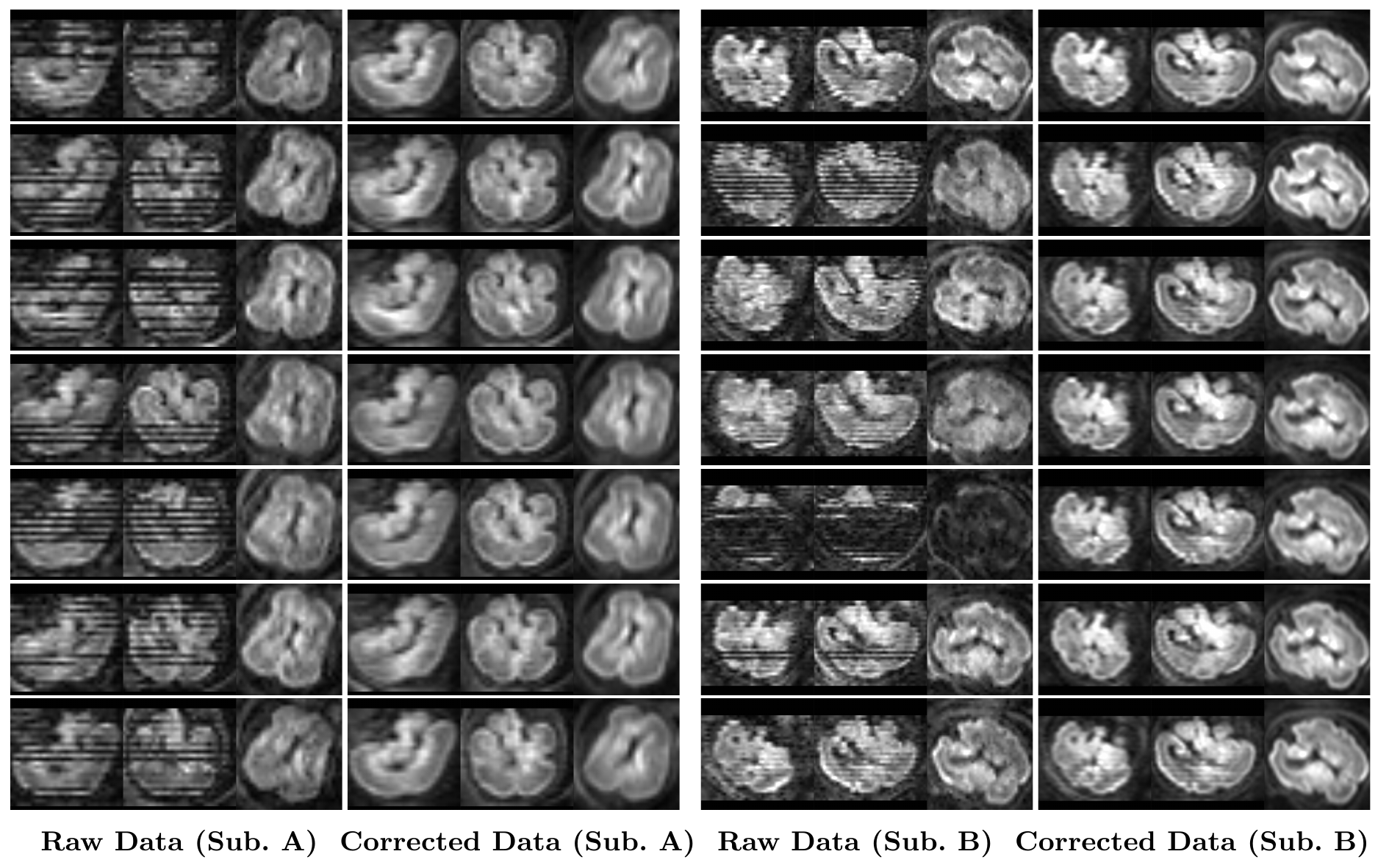
Figure 1. Two examples fetal dMRI scans before and after motion correction.
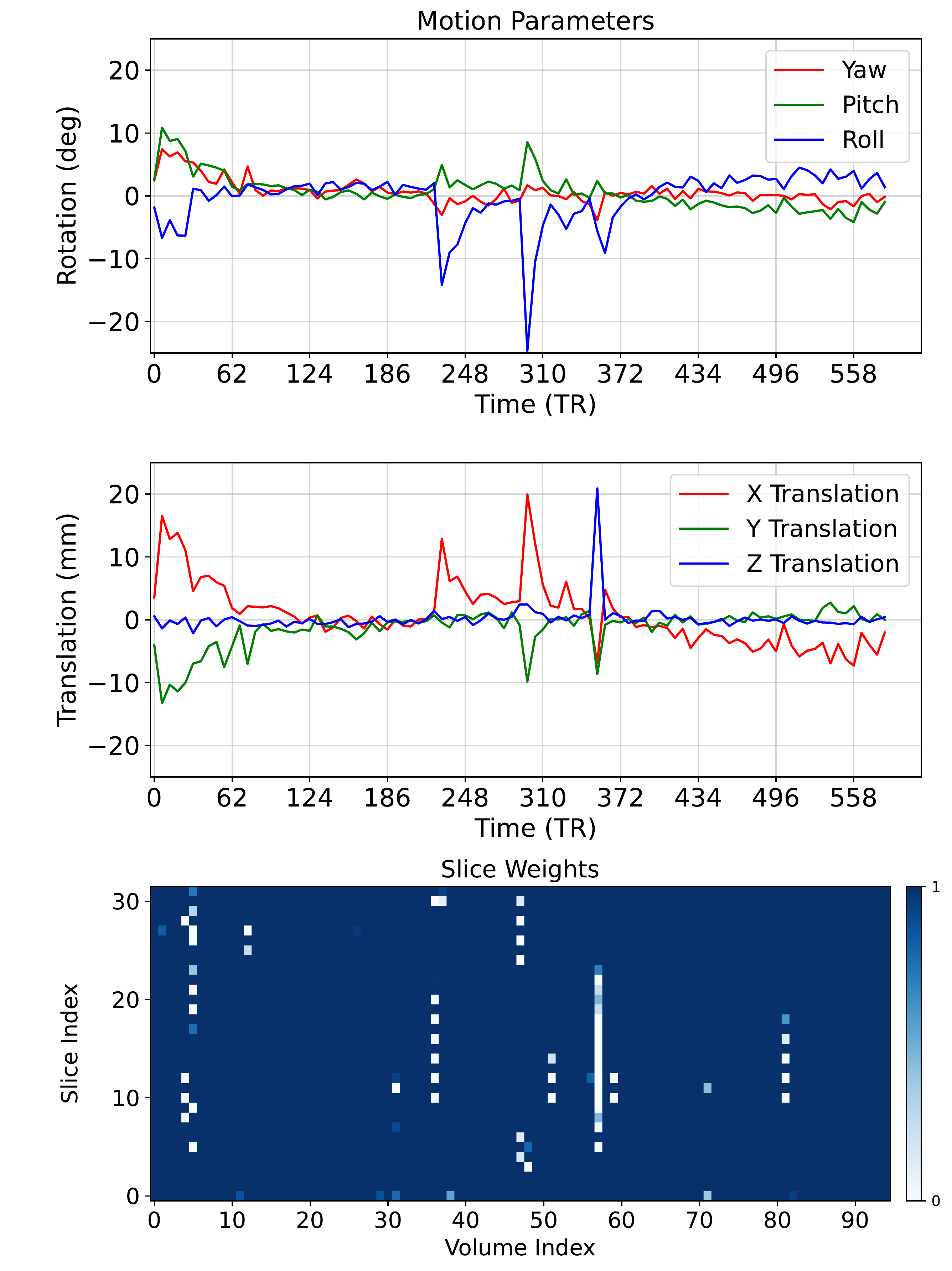
Figure 2. Estimated motion parameters and slice weights for Subject B. Peaks in motion correlate with low slice weights.
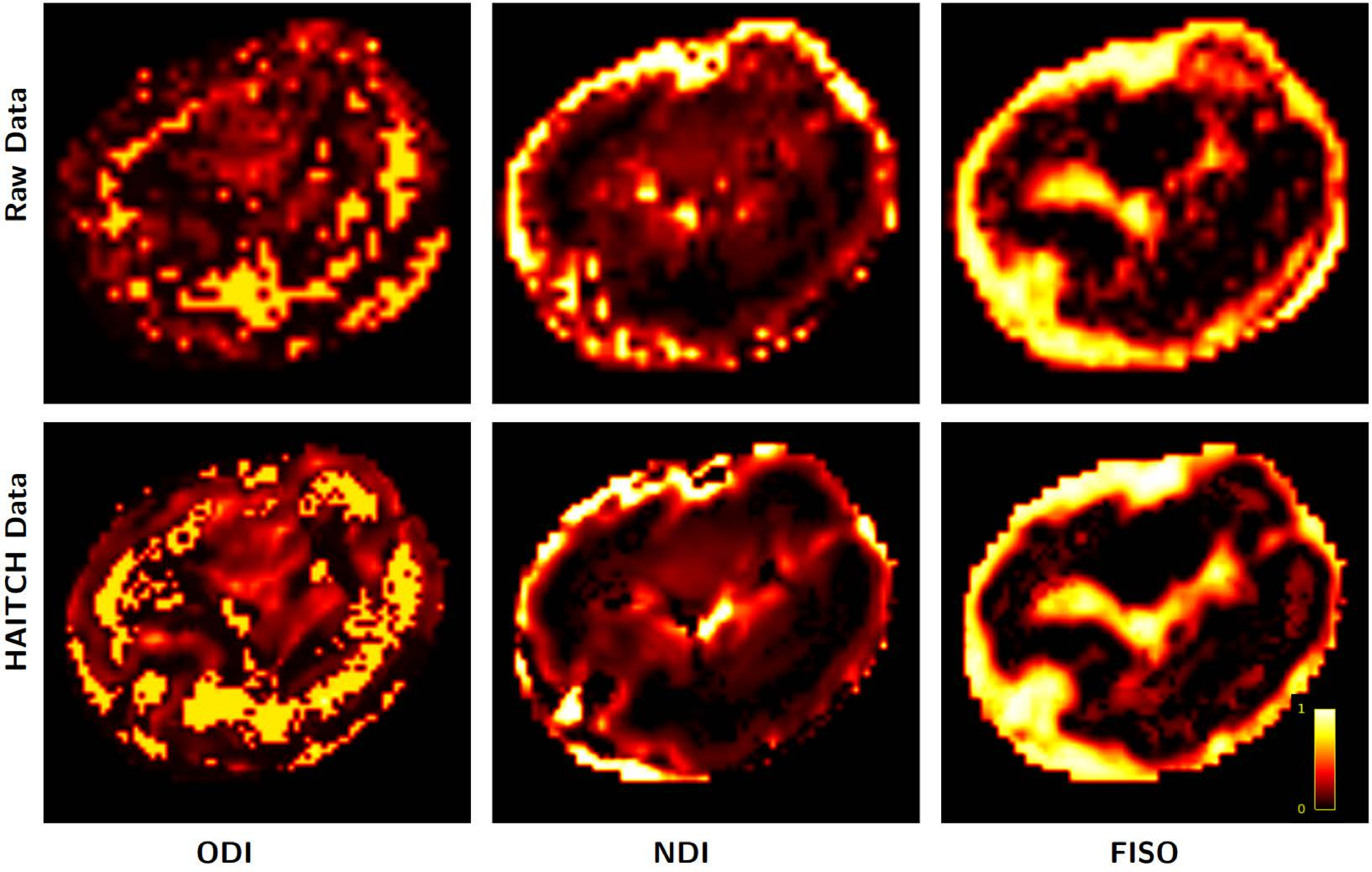
Figure 3. Impact of HAITCH on the quality of NODDI parameter maps.